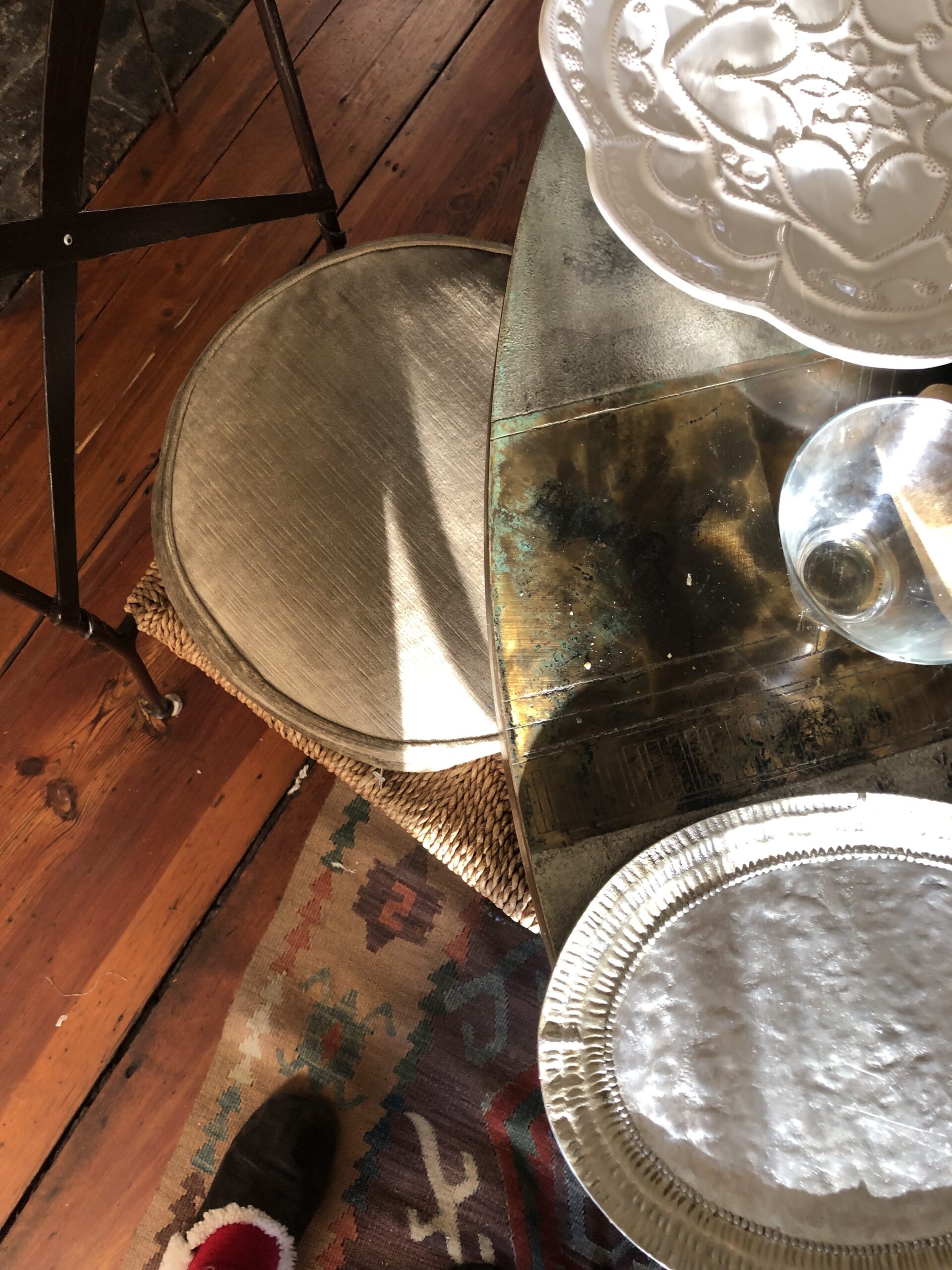
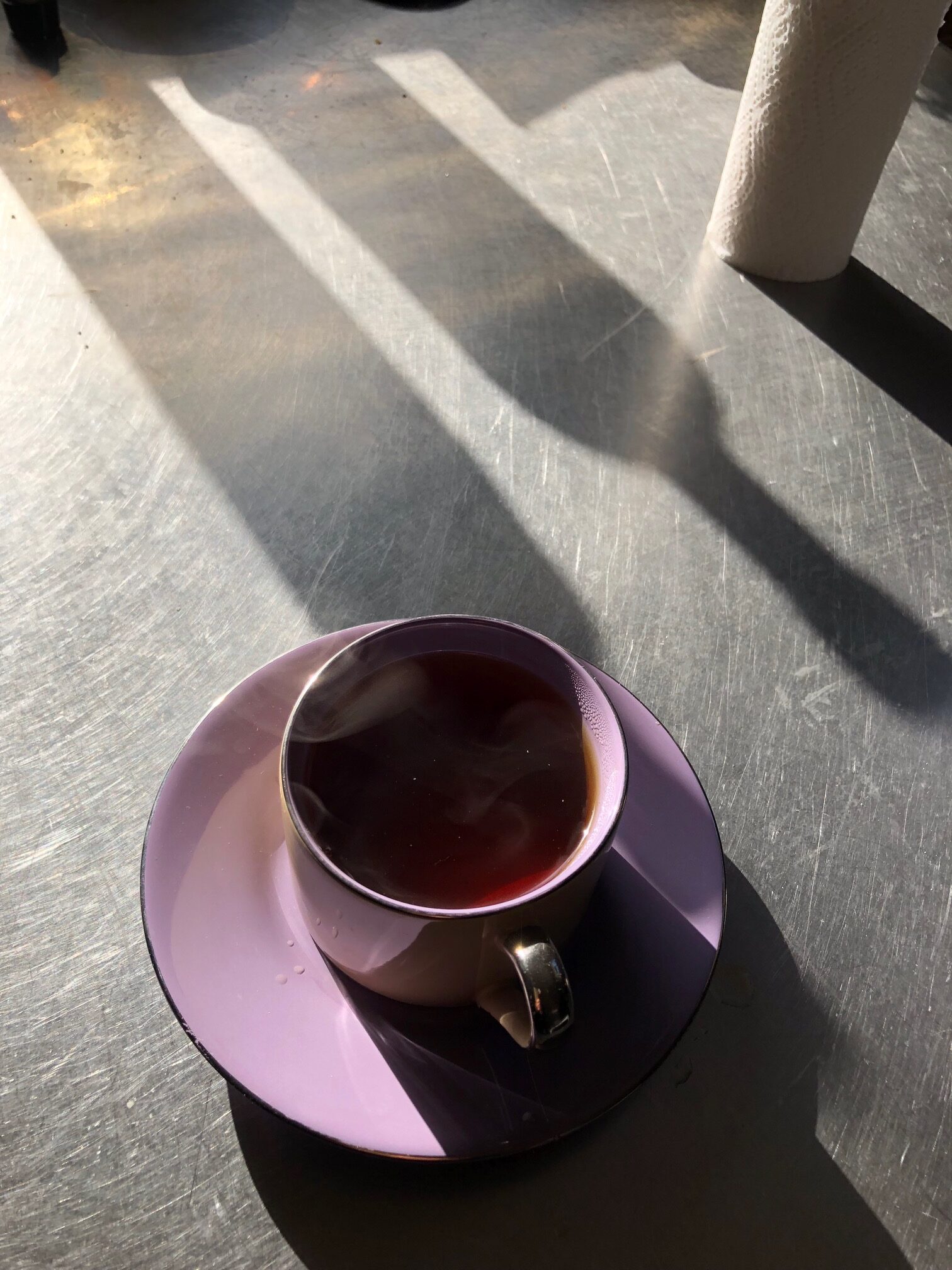
The morning after, the room exhales its smoke and mellow wax. Bivalves cradle each other on a forgotten plate. Lip prints, crumpled napkins, the tint of sun
like an unmade bed — all that happened, happened, in an instant of excess; like a poem, it wings itself without words, long life or perfection.
The slow unpeeling of a lemon on a painter’s canvas will not convince us to mind our decadence. Time does pass — that’s why we celebrate.
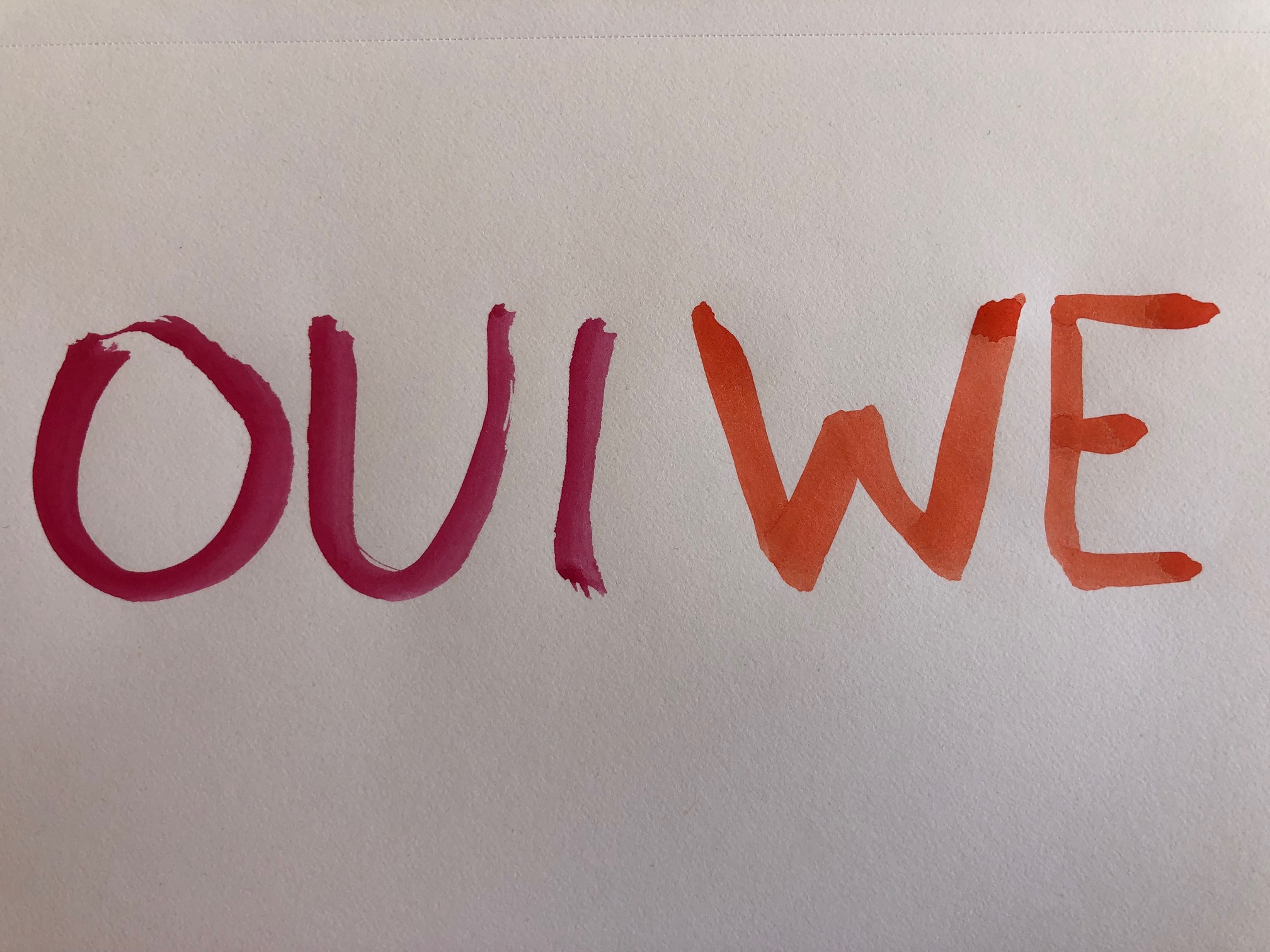
Magenta? I swoon, no matter how much naysayers insist I should pay attention to the end of the world. Pantone may have anointed Viva Magenta the color of 2023, but I’ve been living in that color since the cusp of adolescence. In a series of evolving poems, I’m exploring the how, what, why of colors. Here, from childhood memory, are some lines with jolts of pure precision about self-construction:
streams of plastic beads in orange and pink over my childhood window, wall of color, and what of the palette I made of my skin, vocabulary of my first identity a bolder version of girl that I envisioned
black-haired, black-eyed, skin olivy (my mother called it green) Picasso glazed a green girl before a mirror Manet working magic with black I did magic with magenta, painting a hot-pink babe
The same poem includes a royal sighting: an image of the way colors erupt and disrupt with their beauty.
Stunning, that man stepping from the commuter train cutting a cool diagonal across the macadam — his skin deep and black, his baseball cap magenta vibrant, shivery, majesty shielded by his own boldness turning his palette into talisman daring pink to blush and daring pale to scatter ‘pretty’ to man up in Red Sox country, to visionary himself a living painting
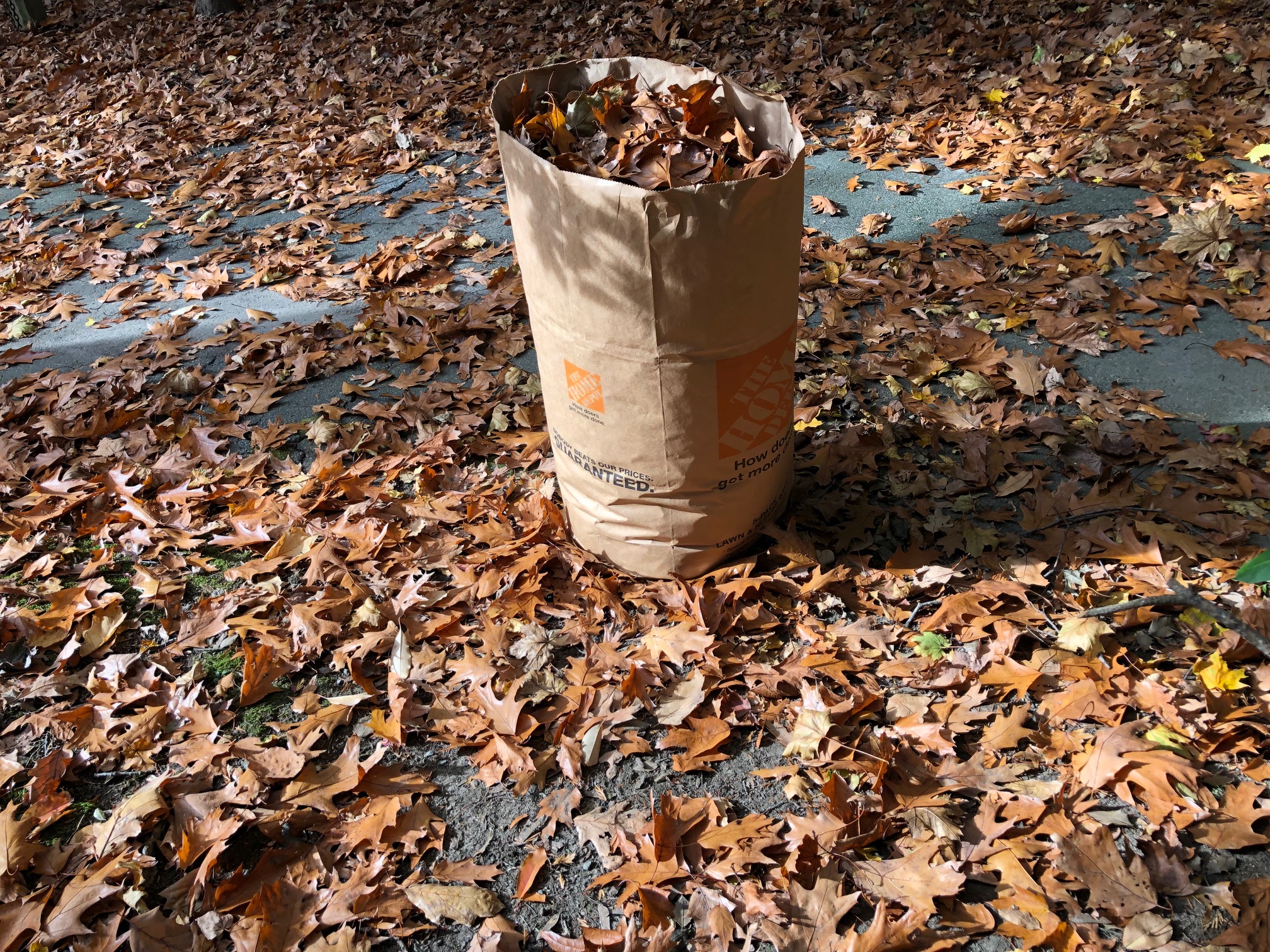
“The colorists get it entirely wrong: nature is colored in winter and cold in summer, there’s nothing colder than full summer sun.” Tell me more, Camille Pissarro! Tell me, French landscape painter, about winter’s color, now that leaves now lying dry in piles, like potato skins or paper bags, light, giddy in the wind, when the pale tones of sky seem colored by remainders. What am I, color addict, missing — what can I see better?
Oh, the brave red leaves still bright on the chokeberry! Oh, the clouds, neatly and darkly swirling as I leave the wine boutique, seemingly curated for a consumer outing. No, those eruptions of drama are too easy, low-hanging fruit.
Pissarro was sure of his paradoxes, having meditated on painting, perception and landscape with a young Cézanne. (I’m reading T.J. Clark’s “If These Apples Should Fall.”). As I unravel this, I see that Pissarro was a consummate stylist suppressing the tick of giving humans what we want and need from nature, of pressing human eros onto landscape. Instead, he gives us nature without desire. Instead of our narratives of drama and excitement, he gives us a swath of everything without hierarchy or privilege, the totality in concert. It’s less a harmony than monotony, a stretching of a country moment, as Clark writes, “unique, noticeable, difficult unrepeatable persistence.”
Not beautiful because of a hidden light, but because it is stubborn. Winter’s long contemplation.
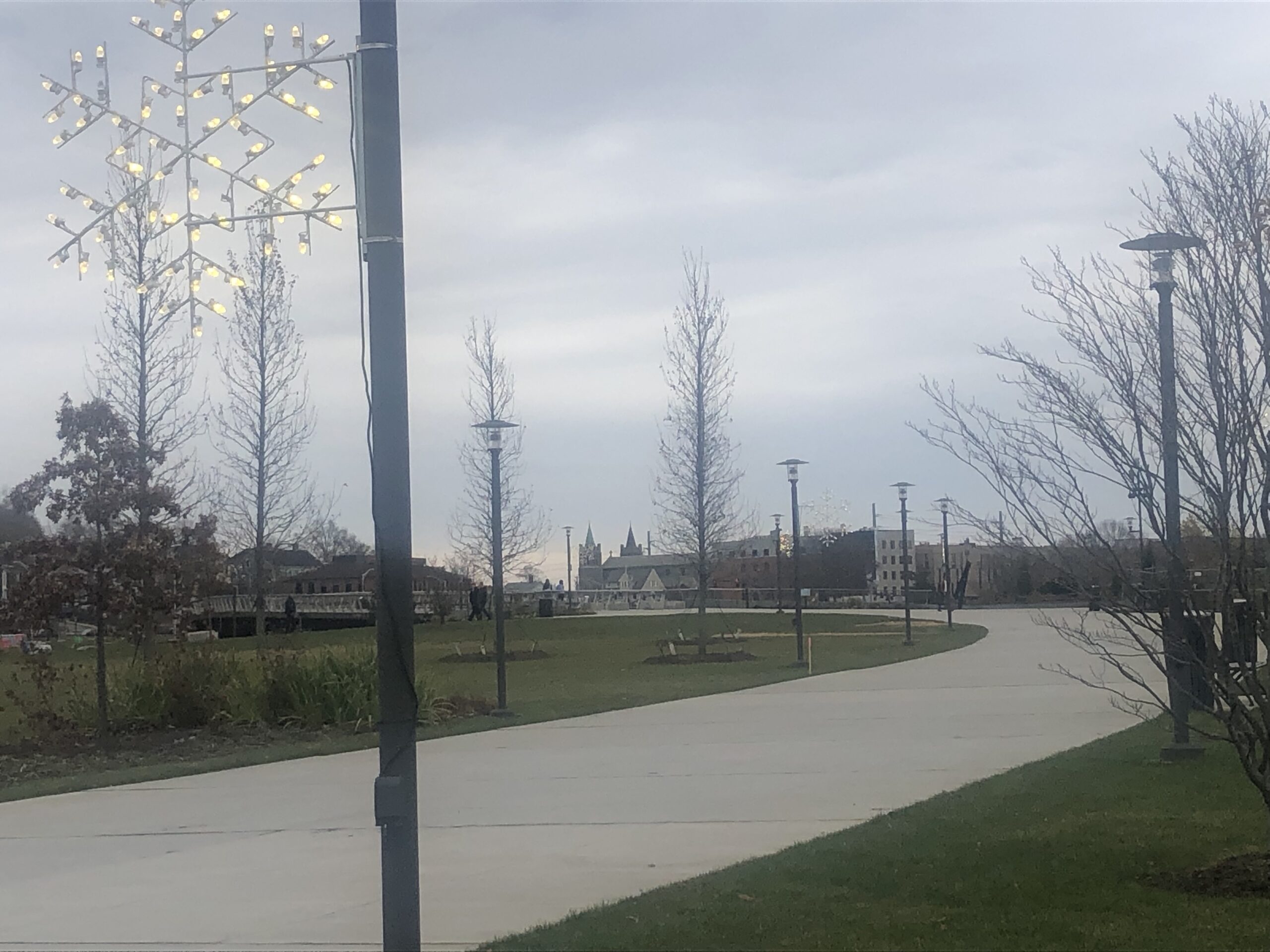
That patch of clean clear grass will last only as long as I stand there, brown elm leaves falling around me, and yet I keep raking.
The sea of leaves will overtake us, as will early darkness.
I keep stuffing them in bags, happily trouncing.
Ask Job, I say joyously.
Clapping the piles to my chest: the only thing I can only believe in is the absurd.
Leaf them their, they’ll melt like snow, or will they?
Their crisp peering skins
the brown leaf, waves, the surging sea of them. If I made piles of leaves to jump in, the kids in the dorm next-door would all come for their goalless pleasure. In the name of decomposition.
Animals, funghi. There is always funk before recreation.
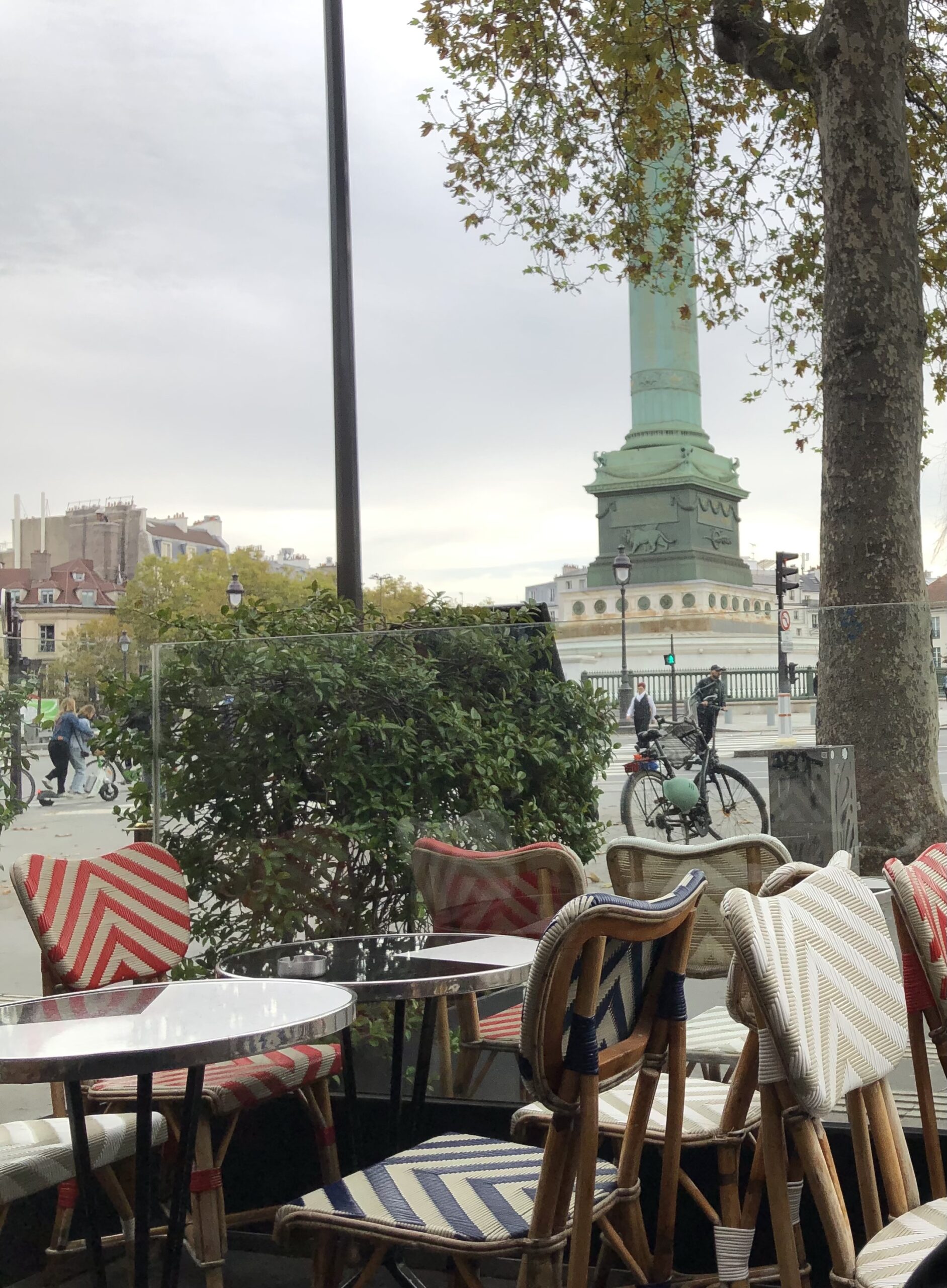
Each time, after countless trips, still strange magic. Hours ago, we were eating croissants in the sun, looking at the soft green column of the Bastille,
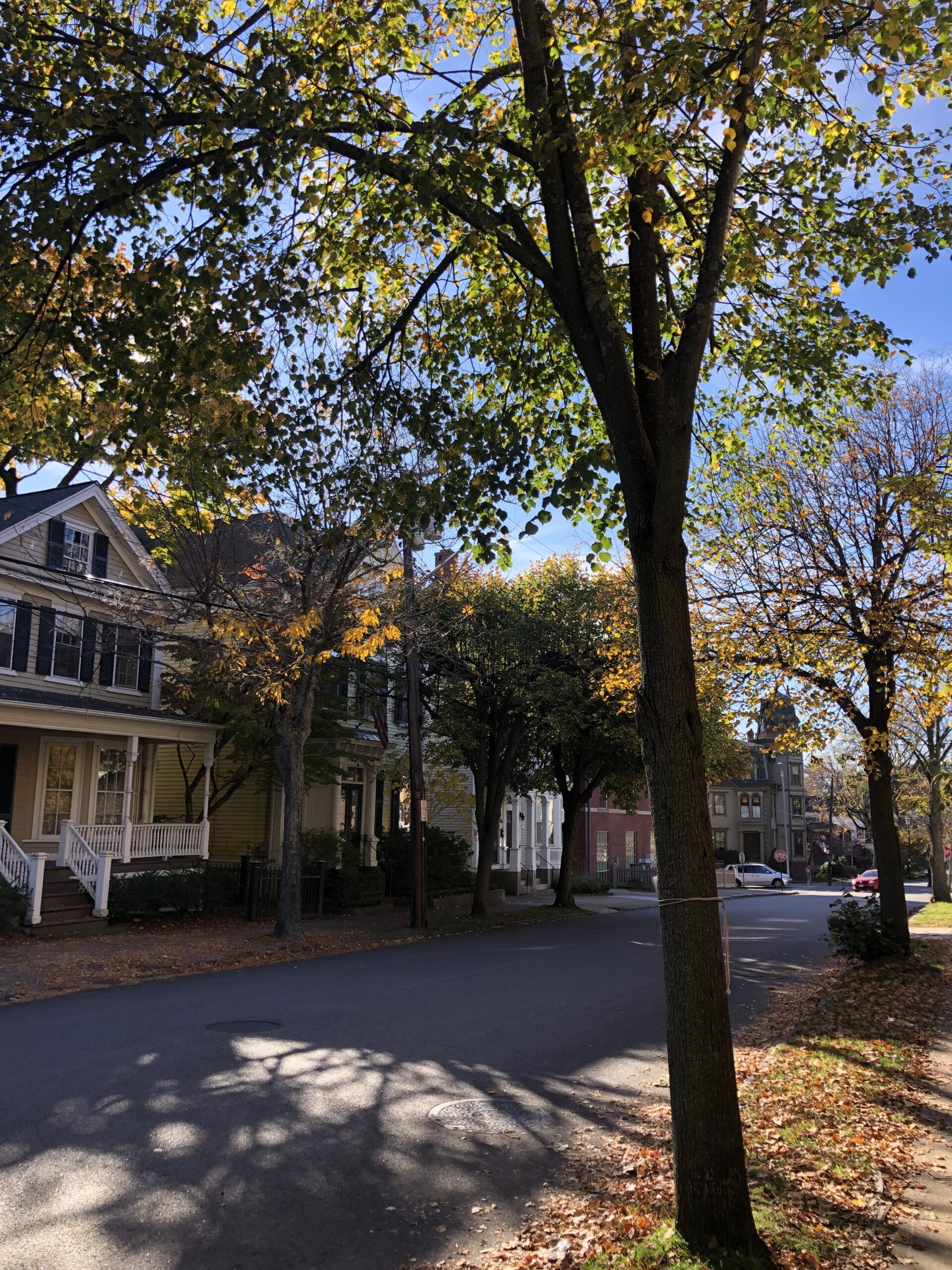
the genie de la Liberté, golden wings aloft, still leaping. Today I wake up to crisp carpeting leaves in an old Puritan village.
The time capsule of my body registers the mystery. Back home, friends say: how fast that went! Routine moves briskly like an airport moving walkway.
Decades ago, dazzled by a bold travel escapade, I vowed to keep displacement center stage. We met a friend outside our office building,
It was dusk on Sixth Avenue, New York. He was cursing the broken Xerox machine.
Rimbaud says make yourself a stranger. He was young, so was I. Still we try. Je est. I is. Til I trip again.
[Some smart-aleck loser decided to hack my little poetry site — hope he got some jollies! We’ve been out of commission for a while. I am back-posting this piece, and will jump to the present presently!]
How amazing to be in Israel when the cycle of Torah reboots and goes back to Scroll One, Genesis.
In the beginning, a navel.
In the beginning, a gleam in God’s eye.
In the beginning, darkness over the surface of deep, an emptiness so charged and gusty you could hardly breathe.
In the seed of the beginning lies all potential: ribs, apples, hips, feral cats, wild bougainvillea, kings and wars, death and grieving, sexy knees, black leather jackets, billets doux, baldies, mobile phone junkies, black hats, the whole gamut into infinity.
Faraway looks, sea crashing on the rocks. Traffic circles, radiated sunsets, fission process, heartbreak and its abysses.
Trying to make order out of chaos — beresheit – was never an easy task, even for you know who. You might even say, in the beginning was the beginning, and the rest is commentary.
I take the Waste Land as a day-to-day thing. When a dismal, cold slate gray rain falls from a slate gray sky, when it looks like wartime London, need we say more — T.S. Eliot’s 1922 poem, celebrating its centennial, rules. A wasteland is a wasteland is a wasteland. The prophetic voice of the poem sets the stage, as it is dramatic, for the habitation of our current dark times.
Then the tail of the hurricane clears the way for a gleam of sun to make shoot through treetops of an elm treetops — oh fickle reader, I put catastrophe further back on the horizon, leave the charred landscape for another day.
As things change, there is one thing I know — the poem of the Wasteland, a gorgeous collage of urban, literary and mythical remixings — has many voices, many ways to see the flux. Etymologically, the word Catastrophe, in ancient Greek, fuses “down, against” and “I turn” to signify “I overturn.”
The current conversation about environment, the Anthropocene & impending disaster is different ways to turn our vision. For me, it is the project of expanding and broadening the ways of beauty. Poetry with its poking and prodding stick probably says it better, making forays into territories that were once forbidding but where with imagination and stillness we now can go. Into wastelands as rich wild places, places of possible regeneration. Or fascination, empty spaces that make poets from divergent times contemporaneous.
Back in the day when I was a kid, it seemed cool to be an old soul. Whoever first enlightened me, when I first heard the phrase (to be or to have?), I don’t recall. Being an old soul seemed like a good defense for a solitary or brooding adolescent— especially when you have big black eyes too serious for your face!
Now that I’m not a kid, I’m thinking it might be cool to be a young soul. It’s not up to us, of course, not on the smorgasboard of options. Yet after yet another birthday, I’m thinking why not. It always takes a while to come to oneself. This old soul has learned a few things; it understands that play makes everything tick, beauty is real, everything keeps turning and flowing, go!
Now during the Jewish High Holidays, we are told that our souls are washed, we get refreshed, the clock is set back to how God made us, we get spanking fresh souls. Birthday of the world — aha! Old soul, meet young soul. May you be renewed, and be yourself.